

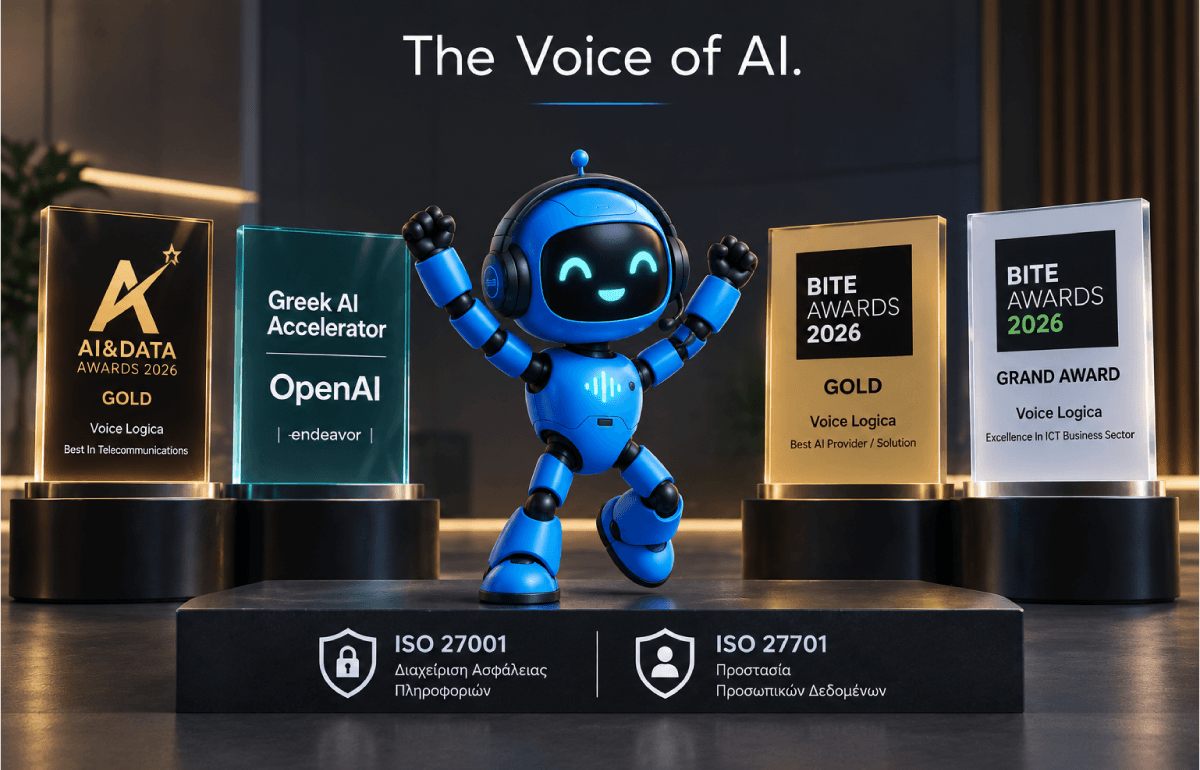
Double Recognition at the BITE Awards 2026: Gold and Grand Award
Voice Logica’s AI Voice Agents platform received a Gold Award in the Best AI Provider / Solution category and a Grand Award in the Excellence in ICT Business Sector pillar.
Most Voice AI projects don’t fail because of the technology. They fail because what works in a demo doesn’t survive production.
Voice AI has moved from experimentation to real business expectations. Enterprises are no longer asking if they should adopt it, but how to deploy Voice AI in production in a way that actually delivers results.
And that’s where reality hits.
A working demo is easy. A production-ready system is not.
Because deploying Voice AI is not about models or prompts. It’s about building enterprise voice AI systems that operate reliably, integrate deeply, and evolve continuously.
At Voice Logica, we approach Voice AI as infrastructure, not as a tool.
Here’s what that actually takes.
Most Voice AI implementation efforts start in the wrong place: technology.
But production systems don’t begin with models, they begin with clear business intent.
A vague goal like “improve customer experience” leads nowhere.
A specific one like “automate billing inquiries with 80% containment” creates direction.
And most importantly: not all use cases are the same.
A billing support agent must:
A lead qualification agent must:
Same technology. Completely different systems.
This is why Voice AI is not generic.
You don’t deploy Voice AI broadly. You deploy it precisely.
Once the use case is clear, the next step is not training, it’s designing the system logic.
Because in production, conversations are not free-flowing. They are structured processes expressed through voice.
You need to map:
Real users will:
Your system must not just respond, it must navigate complexity with control.
Think less like a chatbot. Think more like an operational workflow with a voice interface.
Without this layer, Voice AI sounds impressive, but behaves unpredictably.
Training matters, but reliability matters more.
A production Voice AI system must perform consistently across real-world conditions, not just ideal scenarios.
This means handling:
But training alone is not enough.
You need structured testing:
The goal is not to make the system perfect. It’s to make it predictable.
Because in production, failure is inevitable, but uncontrolled failure is unacceptable.
No Voice AI system is complete at launch.
Real-world usage will always reveal:
This includes:
Over time, the system evolves:
Voice AI is not static software.
It is a living system that improves through use.
The biggest misconception about Voice AI is that it’s something you install.
In reality, it’s something you build into your operations.
That means:
This is the difference between:
At Voice Logica, we focus on the latter.
If your strategy is centered around models, you’ll stay in experimentation.
If your strategy is centered around systems, you’ll reach production.
Deploying Voice AI in production requires:
That’s how Voice AI becomes more than a capability. It becomes infrastructure.
Most organizations don’t struggle because they lack access to AI.
They struggle because production requires more than technology, it requires execution.
If you’re exploring how to deploy Voice AI in production, not as a demo, but as real operational infrastructure, it starts with the right foundation.
Voice Logica’s AI Voice Agents platform received a Gold Award in the Best AI Provider / Solution category and a Grand Award in the Excellence in ICT Business Sector pillar.

Voice automation is no longer about whether it works. It does. The real question in 2026 is different: What does “good” actually look like? Because the gap is becoming obvious. Some systems still live in the world of demos, where conversations are clean, flows are predictable, and everything works…
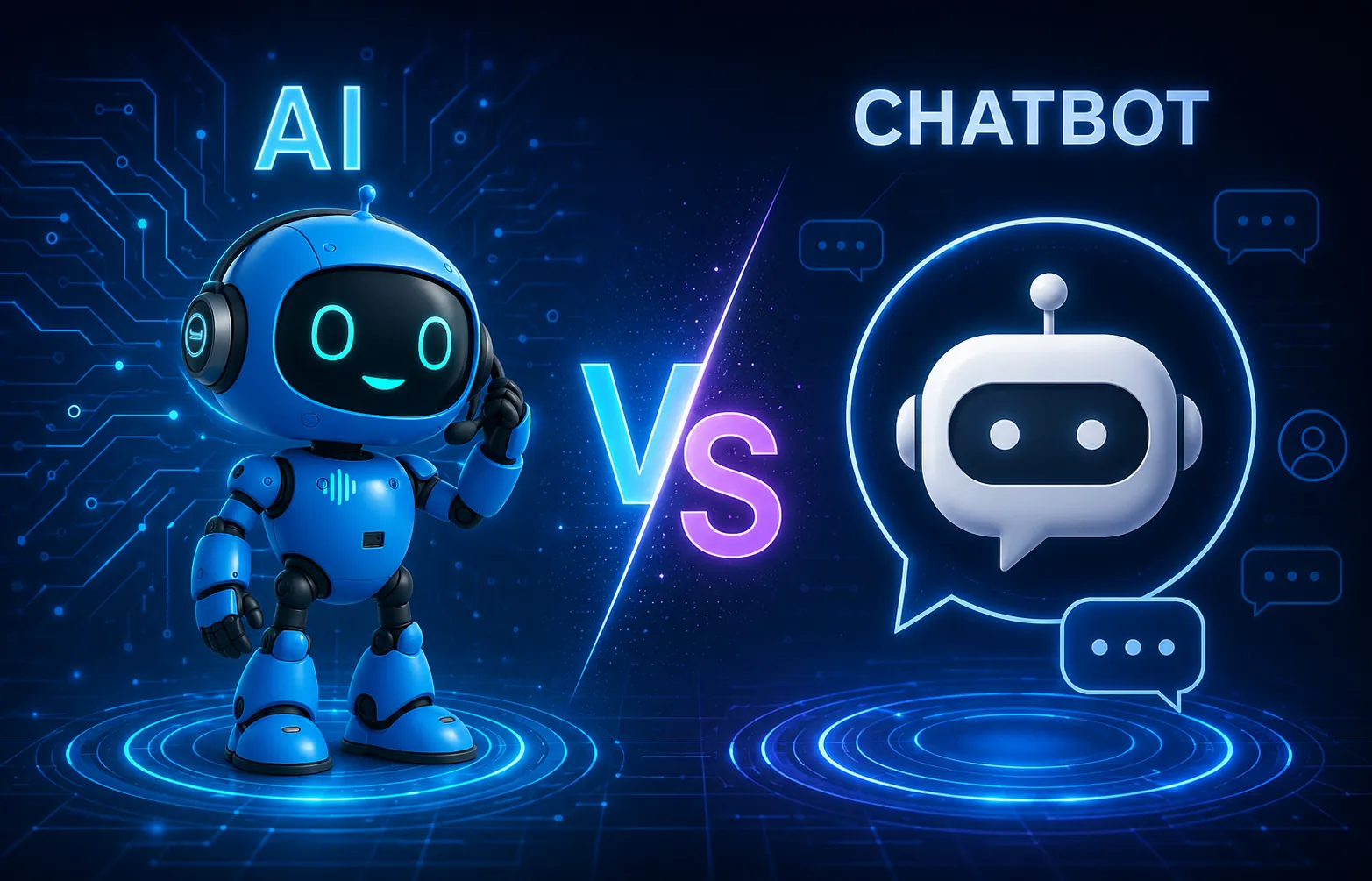
For years, chatbots have been the default entry point into conversational automation. They are easy to deploy, widely adopted, and familiar to users. For many organizations, “automation” has effectively meant “chat.” But that assumption is starting to break. Because not all interactions are meant…

Reinforcing Trust Through Internationally Recognized Standards
Most Voice AI platforms look impressive in a demo. The voice is natural. The responses are fast. The experience feels seamless. But demos are controlled environments. Production is not. This is where many organizations make a critical mistake: they evaluate Voice AI based on how it performs in…

This is where Voice AI is starting to change the equation, not by replacing teams, but by absorbing the operational load that doesn’t require human intervention.