

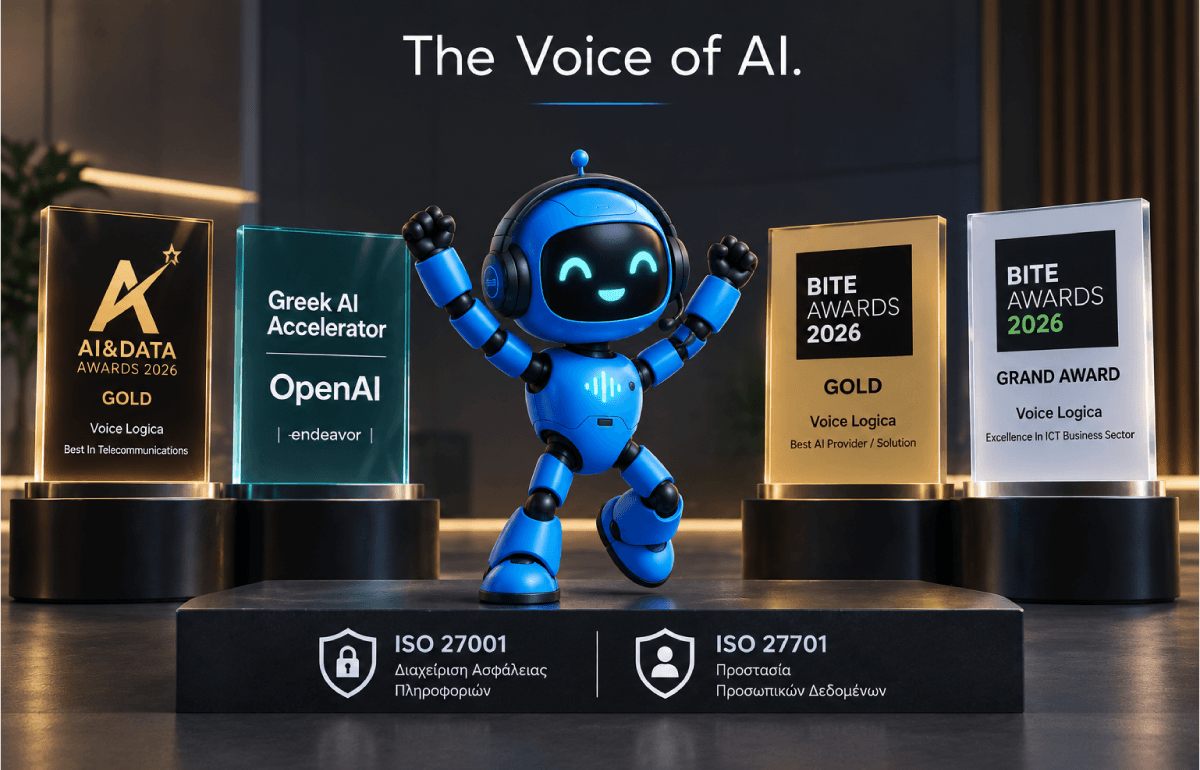
Double Recognition at the BITE Awards 2026: Gold and Grand Award
Voice Logica’s AI Voice Agents platform received a Gold Award in the Best AI Provider / Solution category and a Grand Award in the Excellence in ICT Business Sector pillar.
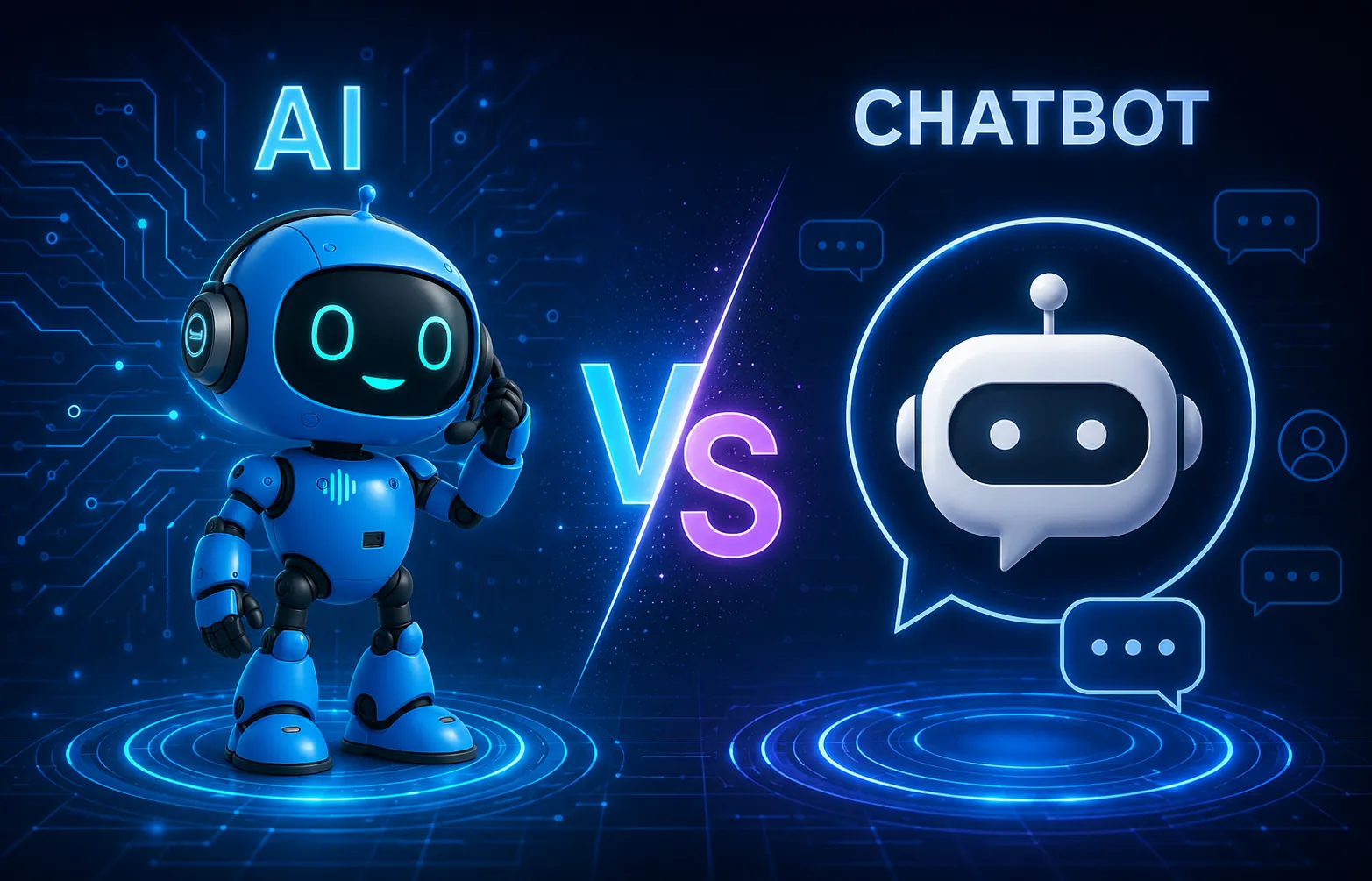
For years, chatbots have been the default entry point into conversational automation. They are easy to deploy, widely adopted, and familiar to users. For many organizations, “automation” has effectively meant “chat.” But that assumption is starting to break. Because not all interactions are meant to be typed. And not all problems are solved efficiently through chat. As Voice AI matures, a more important question is emerging: When is voice actually the better interface?
Chatbots became popular for a reason.
For structured, low-urgency interactions, chat is often sufficient. But as usage scales, limitations become clear. Chat introduces friction:
What works for simple tasks becomes inefficient for anything more dynamic.
Voice is fundamentally different from chat.
It is:
Instead of typing, users speak. Instead of navigating, they express intent directly. This reduces friction dramatically, especially in high-frequency or time-sensitive interactions. But more importantly: Voice changes not just how users interact, but how systems are designed.
Voice is not universally better. But in specific scenarios, it is significantly more effective than chat.
When users need immediate answers, chat becomes slow. Example: “Where is my order?”
The difference is not marginal. It’s experiential. Voice reduces:
For tasks users perform often, efficiency matters more than interface preference. Examples:
Typing the same request repeatedly creates friction. Voice removes that friction entirely. Over time, this leads to:
Chat assumes attention. Voice works without it. Use cases where voice clearly wins:
In these contexts, chat is not just inefficient, it’s impractical. Voice becomes the only viable interface.
In workflows like:
Voice accelerates the process. Instead of navigating forms or typing step-by-step, users can:
When combined with backend integration, Voice AI can:
All in a single interaction.
Voice is powerful, but not always the right choice. Chat remains preferable when:
Examples:
In these cases, chat provides clarity that voice cannot.
The biggest mistake is framing this as a competition. Voice vs chat is not a binary decision. It’s a contextual one. High-performing organizations design systems where:
Voice handles speed and execution
Chat handles detail and persistence
This creates a hybrid interaction model:
Choosing between voice and chat is not just a UX decision. It’s an operational one. Because each interface:
The interface is only the surface. The system behind it is what determines success.
The conversation is changing.
From: “Should we use chatbots?”
To: “Which interface fits this interaction best?”
And increasingly, the answer includes voice.
Not because it replaces chat. But because it solves problems chat was never designed to handle.
Chatbots made automation accessible. Voice AI is making it scalable. The question is no longer which one is better. It’s: Where does each one actually work? And in many high-frequency, real-time, operational interactions, voice is the better interface.
Voice Logica’s AI Voice Agents platform received a Gold Award in the Best AI Provider / Solution category and a Grand Award in the Excellence in ICT Business Sector pillar.

Voice automation is no longer about whether it works. It does. The real question in 2026 is different: What does “good” actually look like? Because the gap is becoming obvious. Some systems still live in the world of demos, where conversations are clean, flows are predictable, and everything works…

Reinforcing Trust Through Internationally Recognized Standards

Most Voice AI platforms look impressive in a demo. The voice is natural. The responses are fast. The experience feels seamless. But demos are controlled environments. Production is not. This is where many organizations make a critical mistake: they evaluate Voice AI based on how it performs in…

This is where Voice AI is starting to change the equation, not by replacing teams, but by absorbing the operational load that doesn’t require human intervention.
Voice AI can deliver real business value today. But only in the right use cases.