

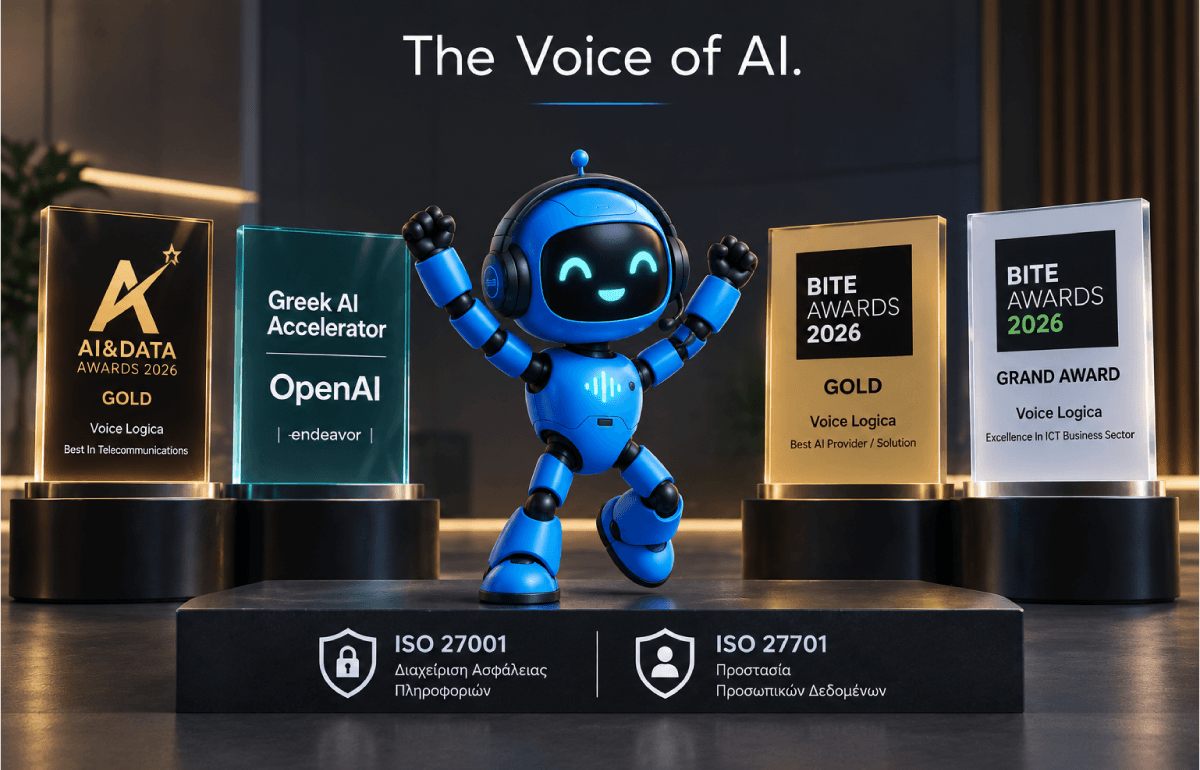
Double Recognition at the BITE Awards 2026: Gold and Grand Award
Voice Logica’s AI Voice Agents platform received a Gold Award in the Best AI Provider / Solution category and a Grand Award in the Excellence in ICT Business Sector pillar.
Voice AI can deliver real business value today. But only in the right use cases.
Despite rapid advancements, many organizations still make the same mistake: they assume Voice AI can handle everything.
It can’t.
And trying to force it into the wrong use cases doesn’t just fail, it erodes trust, frustrates users, and undermines the entire initiative.
The companies that succeed with Voice AI today are not the ones that adopt it fastest.
They are the ones that apply it precisely.
This means understanding one simple reality:
Voice AI is powerful, but only in the right context.
When deployed correctly, Voice AI can automate interactions at scale, reduce operational costs, and improve responsiveness.
But these outcomes are not universal. They appear in specific, structured scenarios.
Voice AI performs exceptionally well in environments where:
Examples include:
These interactions don’t require deep reasoning or complex decision-making.
They require:
In these cases, Voice AI can achieve high containment rates while reducing pressure on human agents.
When Voice AI is connected to backend systems, it becomes significantly more valuable.
Use cases like:
are ideal because they combine:
Example:
A customer asks: “Where is my order?”
A well-integrated system can:
This is where Voice AI transitions from answering questions → to completing tasks.
Voice AI is highly effective in managing structured workflows like:
These interactions work well because they:
Additionally, they remove a significant operational burden from teams handling repetitive coordination tasks.
In industries like healthcare, telecom, and services, this is often one of the fastest ways to see ROI.
Understanding limitations is just as important as understanding capabilities.
Because misuse is what leads to failure.
Voice AI struggles in situations that require:
Examples include:
In these scenarios, users expect:
Even highly advanced systems can fall short, not because they are inaccurate, but because they are not human.
These interactions are better handled by human agents, with AI supporting, not replacing, them.
Voice AI also underperforms in environments where:
Examples:
These scenarios introduce:
And in production environments, unpredictability is a liability.
Voice AI doesn’t fail because it lacks capability. It fails when we expect it to behave like a human.
Most Voice AI failures don’t come from weak technology.
They come from misalignment between use case and capability.
Organizations often:
The result is predictable:
Voice AI doesn’t fail because it doesn’t work. It fails because it’s applied where it shouldn’t be.
Successful companies approach Voice AI with discipline.
They don’t try to replace humans. They focus on augmenting operations where automation makes sense.
Over time, this creates:
The fastest way to lose trust in Voice AI is to oversell it. The fastest way to build trust is to apply it where it actually works. Because credibility doesn’t come from what the technology can do.
It comes from what it consistently delivers in production.
Voice AI is not a universal solution. It is a precise tool, powerful when used correctly, ineffective when misapplied.
The question is not: “Can Voice AI handle this?” The question is: “Should it?”
And that distinction makes all the difference.
Voice Logica’s AI Voice Agents platform received a Gold Award in the Best AI Provider / Solution category and a Grand Award in the Excellence in ICT Business Sector pillar.

Voice automation is no longer about whether it works. It does. The real question in 2026 is different: What does “good” actually look like? Because the gap is becoming obvious. Some systems still live in the world of demos, where conversations are clean, flows are predictable, and everything works…
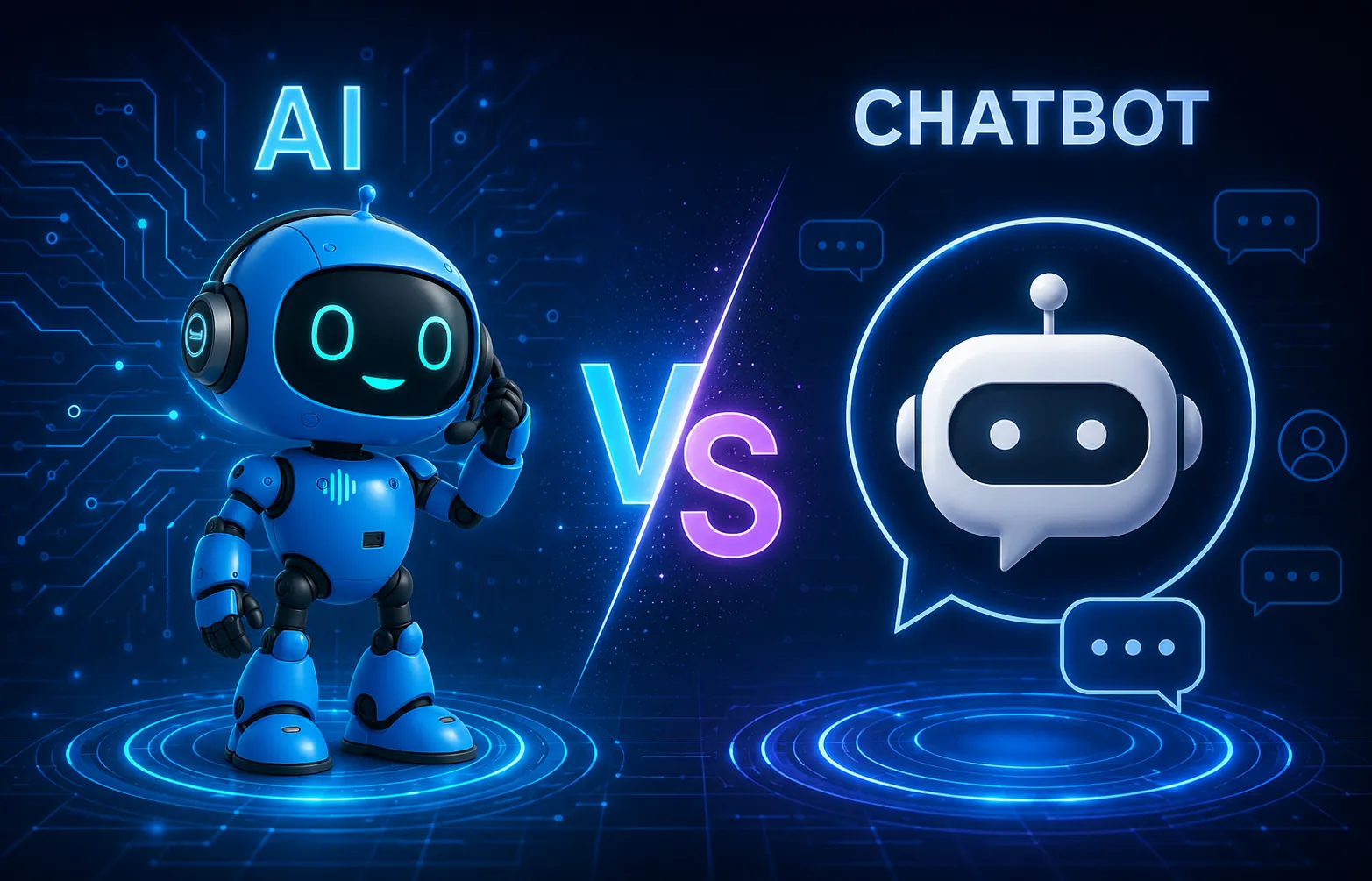
For years, chatbots have been the default entry point into conversational automation. They are easy to deploy, widely adopted, and familiar to users. For many organizations, “automation” has effectively meant “chat.” But that assumption is starting to break. Because not all interactions are meant…

Reinforcing Trust Through Internationally Recognized Standards

Most Voice AI platforms look impressive in a demo. The voice is natural. The responses are fast. The experience feels seamless. But demos are controlled environments. Production is not. This is where many organizations make a critical mistake: they evaluate Voice AI based on how it performs in…

This is where Voice AI is starting to change the equation, not by replacing teams, but by absorbing the operational load that doesn’t require human intervention.