

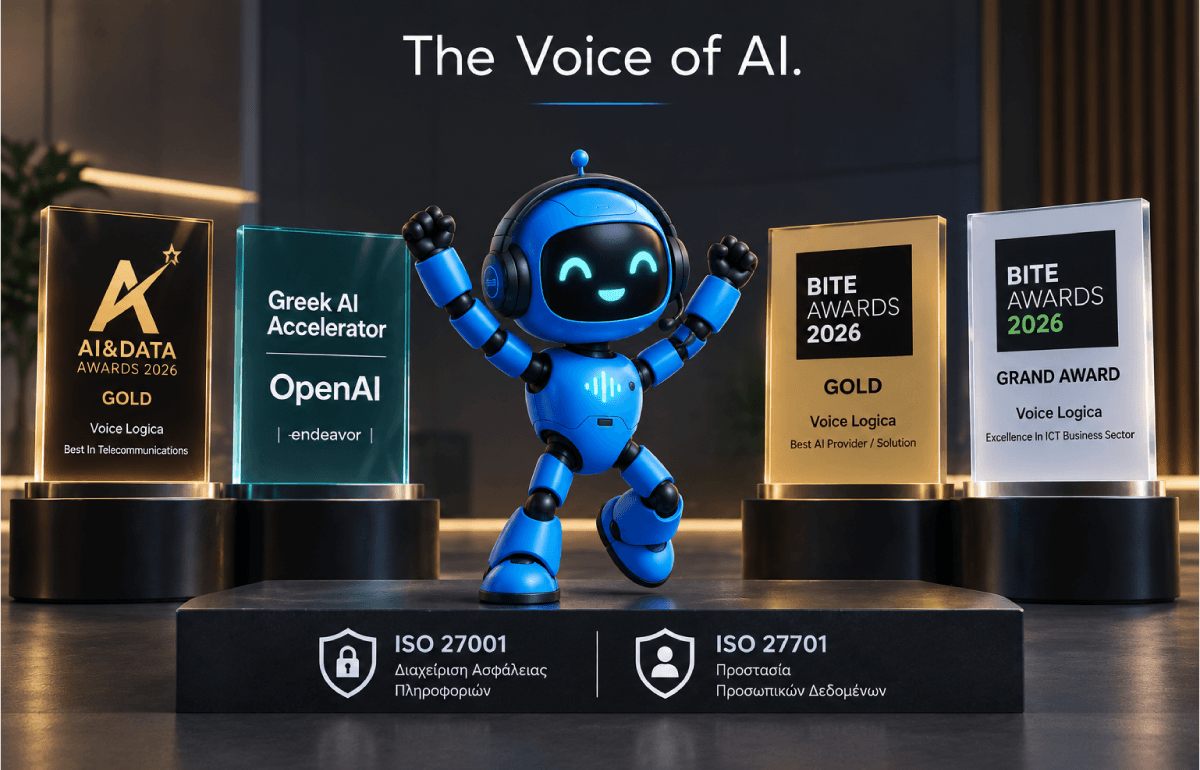
Double Recognition at the BITE Awards 2026: Gold and Grand Award
Voice Logica’s AI Voice Agents platform received a Gold Award in the Best AI Provider / Solution category and a Grand Award in the Excellence in ICT Business Sector pillar.

Most Voice AI platforms look impressive in a demo. The voice is natural. The responses are fast. The experience feels seamless. But demos are controlled environments. Production is not. This is where many organizations make a critical mistake: they evaluate Voice AI based on how it performs in ideal conditions, not how it behaves in reality. And that gap is where most implementations fail.
Because the real question is not: “Does it work in a demo?”
It’s: “Will it work in production, under real conditions, at scale?”
In a demo, conversations are clean and predictable. In production, they are not.
Real users:
Interrupt
Change intent mid-sentence
Speak unclearly
Provide incomplete information
A Voice AI platform must be able to handle:
A user starts with: “I want to check my bill…”
…and then says: “Actually, I want to change my plan.”
A demo-ready system may fail or restart. A production-ready system adapts.
This is the difference between:
A conversational interface
And a conversation system
If the platform cannot manage real conversational behavior, it will not survive production.
A Voice AI platform without integration is just a voice layer. It can respond, but it cannot act. And in real operations, value comes from action. Key questions to ask:
A customer says: “I want to pay my bill.”
Without integration → “You can pay your bill online.”
With integration → “Your outstanding balance is €120. Would you like me to process the payment now?”
This is not a feature difference. It’s an architectural difference. Platforms that are not built for integration will always remain limited, no matter how good the demo looks.
Speed of deployment is often misunderstood.
Many platforms promise:
But fast setup is not the same as production readiness. The real question is: How quickly can you go from idea → to a working, reliable, integrated system? This depends on:
Workflow design capabilities
Flexibility in defining conversation logic
Ease of integrating with existing systems
Ability to test and iterate quickly
A platform that is easy to start, but hard to scale, creates long-term friction.
A platform that supports structured deployment:
Speed matters. But structured speed matters more.
This is where most platforms break. Because scaling Voice AI is not just about handling more calls. It’s about maintaining:
Consistency
Reliability
Performance
Under pressure.
Key considerations:
During peak periods (e.g. Black Friday), volume spikes.
Scaling is not a technical checkbox. It is an operational requirement.
Most companies don’t choose the wrong platform. They use the wrong evaluation criteria.
And that leads to predictable outcomes:
Strong demos
Weak production performance
Delayed ROI
A production-ready Voice AI platform should:
Because Voice AI is not a feature. It’s infrastructure.
The gap between demo and production is where most Voice AI initiatives fail. Closing that gap requires more than technology. It requires the right platform, designed for real-world complexity, not ideal scenarios. At Voice Logica, this is a core principle: We don’t optimize for demos. We optimize for production.
If you’re evaluating Voice AI platforms, shift your focus:
Because the difference between a successful deployment and a failed one is rarely the model. It’s the foundation.
Voice Logica’s AI Voice Agents platform received a Gold Award in the Best AI Provider / Solution category and a Grand Award in the Excellence in ICT Business Sector pillar.

Voice automation is no longer about whether it works. It does. The real question in 2026 is different: What does “good” actually look like? Because the gap is becoming obvious. Some systems still live in the world of demos, where conversations are clean, flows are predictable, and everything works…
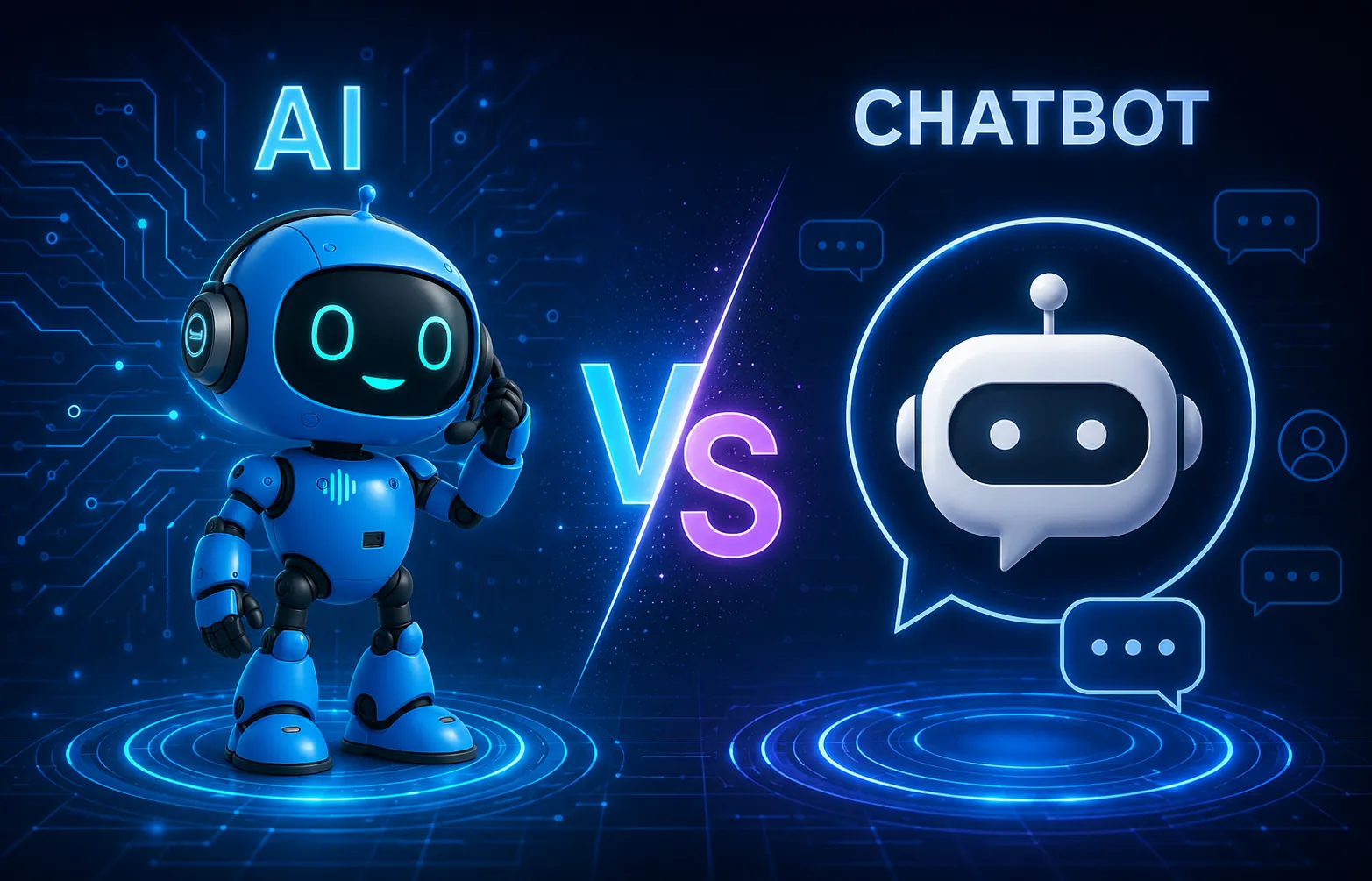
For years, chatbots have been the default entry point into conversational automation. They are easy to deploy, widely adopted, and familiar to users. For many organizations, “automation” has effectively meant “chat.” But that assumption is starting to break. Because not all interactions are meant…

Reinforcing Trust Through Internationally Recognized Standards

This is where Voice AI is starting to change the equation, not by replacing teams, but by absorbing the operational load that doesn’t require human intervention.
Voice AI can deliver real business value today. But only in the right use cases.