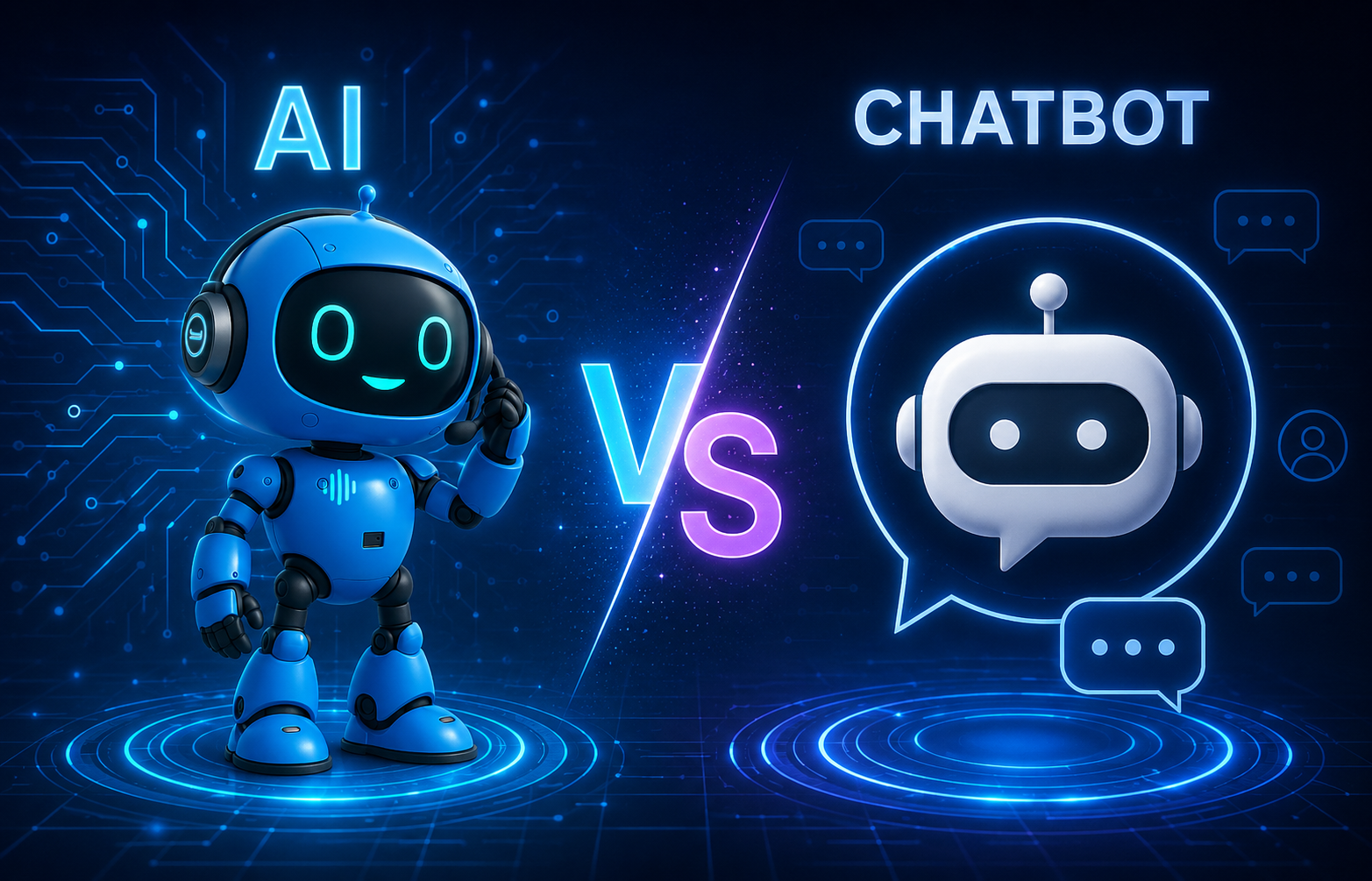

Where Voice AI Actually Works Today

Voice AI can deliver real business value today. But only in the right use cases.

Despite rapid advancements, many organizations still make the same mistake: they assume Voice AI can handle everything.

It can’t.

And trying to force it into the wrong use cases doesn’t just fail, it erodes trust, frustrates users, and undermines the entire initiative.

The companies that succeed with Voice AI today are not the ones that adopt it fastest.

They are the ones that apply it precisely.

This means understanding one simple reality:

Voice AI is powerful, but only in the right context.


Where Voice AI Works Well


When deployed correctly, Voice AI can automate interactions at scale, reduce operational costs, and improve responsiveness.

But these outcomes are not universal. They appear in specific, structured scenarios.

1. High-Volume FAQs


Voice AI performs exceptionally well in environments where:

  • Questions are repetitive
  • Answers are standardized
  • The goal is speed and consistency

Examples include:

  • “What are your opening hours?”
  • “What is my balance?”
  • “How can I reset my password?”

These interactions don’t require deep reasoning or complex decision-making.

They require:

  • Fast recognition
  • Accurate retrieval
  • Clear delivery

In these cases, Voice AI can achieve high containment rates while reducing pressure on human agents.

2. Order Status & Information Retrieval


When Voice AI is connected to backend systems, it becomes significantly more valuable.

Use cases like:

  • Order tracking
  • Delivery updates
  • Account information

are ideal because they combine:

  • Structured requests
  • Real-time data access
  • Clear expected outcomes

Example:

A customer asks: “Where is my order?”

A well-integrated system can:

  • Retrieve real-time status
  • Provide a specific answer
  • Offer next-step actions (e.g. send tracking link)

This is where Voice AI transitions from answering questions → to completing tasks.

3. Appointment Handling & Scheduling


Voice AI is highly effective in managing structured workflows like:

  • Booking appointments
  • Confirmations and reminders
  • Rescheduling

These interactions work well because they:

  • Follow predictable flows
  • Require structured data collection
  • Have clear success criteria

Additionally, they remove a significant operational burden from teams handling repetitive coordination tasks.

In industries like healthcare, telecom, and services, this is often one of the fastest ways to see ROI.

Where Voice AI Doesn’t Work Well (Yet)


Understanding limitations is just as important as understanding capabilities.

Because misuse is what leads to failure.

1. Complex Emotional Interactions


Voice AI struggles in situations that require:

  • Empathy
  • Emotional intelligence
  • Nuanced human judgment

Examples include:

  • Complaint escalation
  • Sensitive financial discussions
  • Conflict resolution

In these scenarios, users expect:

  • Understanding
  • Flexibility
  • Human reassurance

Even highly advanced systems can fall short, not because they are inaccurate, but because they are not human.

These interactions are better handled by human agents, with AI supporting, not replacing, them.

2. Edge-Case-Heavy Support Scenarios


Voice AI also underperforms in environments where:

  • Requests vary widely
  • Exceptions are frequent
  • Flows are unpredictable

Examples:

  • Technical troubleshooting with many variables
  • Unique, non-standard customer issues
  • Cases that require investigation across multiple systems

These scenarios introduce:

  • High ambiguity
  • Constant deviation from expected flows
  • Increased risk of incorrect handling

And in production environments, unpredictability is a liability.

Voice AI doesn’t fail because it lacks capability. It fails when we expect it to behave like a human.

The Real Problem: Misalignment, Not Capability


Most Voice AI failures don’t come from weak technology.

They come from misalignment between use case and capability.

Organizations often:

  • Start too broad
  • Try to automate complex interactions too early
  • Prioritize coverage over precision

The result is predictable:

  • Poor user experience
  • Low containment
  • Increased escalations
  • Internal skepticism

Voice AI doesn’t fail because it doesn’t work. It fails because it’s applied where it shouldn’t be.

How to Think About It Instead


Successful companies approach Voice AI with discipline.

  • Start with structured, high-volume use cases
  • Focus on clear, measurable outcomes
  • Integrate with systems to enable real actions
  • Gradually expand scope based on performance

They don’t try to replace humans. They focus on augmenting operations where automation makes sense.

Over time, this creates:

  • Trust in the system
  • Measurable ROI
  • A foundation for expansion

From Capability to Credibility


The fastest way to lose trust in Voice AI is to oversell it. The fastest way to build trust is to apply it where it actually works. Because credibility doesn’t come from what the technology can do.

It comes from what it consistently delivers in production.

The Bottom Line


Voice AI is not a universal solution. It is a precise tool, powerful when used correctly, ineffective when misapplied.

The question is not: “Can Voice AI handle this?” The question is: “Should it?”

And that distinction makes all the difference.


What It Actually Takes to Deploy Voice AI in Production

Most Voice AI projects don’t fail because of the technology. They fail because what works in a demo doesn’t survive production.

Voice AI has moved from experimentation to real business expectations. Enterprises are no longer asking if they should adopt it, but how to deploy Voice AI in production in a way that actually delivers results.

And that’s where reality hits.

A working demo is easy. A production-ready system is not.

Because deploying Voice AI is not about models or prompts. It’s about building enterprise voice AI systems that operate reliably, integrate deeply, and evolve continuously.

At Voice Logica, we approach Voice AI as infrastructure, not as a tool.

Here’s what that actually takes.


Step 1: Define the Use Case - Not the Technology


Most Voice AI implementation efforts start in the wrong place: technology.

But production systems don’t begin with models, they begin with clear business intent.

  • What problem are you solving?
  • Which conversations should be automated?
  • What are the measurable outcomes?

A vague goal like “improve customer experience” leads nowhere.

A specific one like “automate billing inquiries with 80% containment” creates direction.

And most importantly: not all use cases are the same.

A billing support agent must:

  • Authenticate users
  • Access account data
  • Handle sensitive financial information

A lead qualification agent must:

  • Identify intent
  • Ask dynamic questions
  • Score and route opportunities

Same technology. Completely different systems.

This is why Voice AI is not generic.

You don’t deploy Voice AI broadly. You deploy it precisely.

Step 2: Map Workflows - Every Path, Every Exception


Once the use case is clear, the next step is not training, it’s designing the system logic.

Because in production, conversations are not free-flowing. They are structured processes expressed through voice.

You need to map:

  • Core conversation paths
  • Edge cases and unexpected inputs
  • Escalation logic (when to hand over to humans)
  • Compliance and verification steps

Real users will:

  • Interrupt
  • Change intent mid-call
  • Provide incomplete or unclear answers

Your system must not just respond, it must navigate complexity with control.

Think less like a chatbot. Think more like an operational workflow with a voice interface.

Without this layer, Voice AI sounds impressive, but behaves unpredictably.

Step 3: Train & Test - From Intelligence to Reliability


Training matters, but reliability matters more.

A production Voice AI system must perform consistently across real-world conditions, not just ideal scenarios.

This means handling:

  • Background noise and poor audio quality
  • Interruptions and overlapping speech
  • Accents and phrasing variations
  • Multi-turn conversations with context
  • Ambiguity and incomplete inputs

But training alone is not enough.

You need structured testing:

  • Simulation testing
  • Predefined scenarios across all workflows
  • Adversarial testing
  • Intentionally breaking the system to expose weaknesses
  • Real-user pilots
  • Controlled rollout with live feedback

The goal is not to make the system perfect. It’s to make it predictable.

Because in production, failure is inevitable, but uncontrolled failure is unacceptable.

Step 5: Iterate - Because Production Is Dynamic


No Voice AI system is complete at launch.

Real-world usage will always reveal:

  • New behaviors
  • Unexpected edge cases
  • Gaps in logic
  • Opportunities for improvement

This includes:

  • Conversation analytics
  • Failure and drop-off tracking
  • Performance monitoring against KPIs
  • Ongoing training and workflow optimization

Over time, the system evolves:

  • From handling simple tasks → To managing complex interactions → To becoming embedded in core operations.

Voice AI is not static software.

It is a living system that improves through use.

From Tool to Infrastructure


The biggest misconception about Voice AI is that it’s something you install.

In reality, it’s something you build into your operations.

That means:

  • Designing workflows, not just conversations
  • Integrating systems, not just APIs
  • Managing performance, not just deployment

This is the difference between:

  • A demo
  • And a production system

At Voice Logica, we focus on the latter.

The Bottom Line


If your strategy is centered around models, you’ll stay in experimentation.

If your strategy is centered around systems, you’ll reach production.

Deploying Voice AI in production requires:

  • Precision in use case design
  • Discipline in workflow architecture
  • Deep system integration
  • Continuous iteration

That’s how Voice AI becomes more than a capability. It becomes infrastructure.

Building Voice AI That Actually Works


Most organizations don’t struggle because they lack access to AI.

They struggle because production requires more than technology, it requires execution.

  • Designing workflows.
  • Integrating systems.
  • Ensuring reliability
  • Continuously improving performance.

If you're exploring how to deploy Voice AI in production, not as a demo, but as real operational infrastructure, it starts with the right foundation.


Why Most Companies Fail at Voice Automation (And What to Do Instead)

Most voice automation projects don’t fail because of the technology. They fail because companies implement them the wrong way.

Voice AI is no longer experimental. It’s a core priority in enterprise voice automation strategies, from AI voice agents to conversational IVRs.

And yet, despite growing investment, results often fall short.

Not because the technology isn’t capable, but because voice AI implementation is treated as a tool deployment, not a system design problem.

That’s where things break.


The Illusion of Progress: Deploying Tools Instead of Solving Problems


One of the biggest voice automation challenges is confusing activity with impact.

Organizations move fast:

They select a platform

Deploy a voice agent

Launch quickly

On paper, it looks like progress. In reality, very little changes.

Because voice automation is not about deploying a bot. It’s about solving a specific operational problem.

Reducing call center load

Automating high-volume interactions

Improving response times

Handling demand without scaling costs

Without this alignment, even advanced AI becomes noise inside the system.

And this is where most failures begin.


No Clear Use Case = No Measurable Outcome


The problem becomes even clearer at the next stage: lack of precision.

Many organizations start with vague goals like:

“We want to automate customer service”

“We want to use AI in our calls”

But successful voice AI implementation always starts narrow.

High-performing deployments focus on:

Appointment scheduling

Payment reminders and collections

Lead qualification

First-level support for repetitive requests

These are not random choices.

They are:

High-frequency

Clearly structured

Measurable

They create immediate ROI, and more importantly, a foundation to scale.

Without a defined use case, voice automation becomes too broad to succeed.


Poor Conversation Design Breaks the Experience


Voice is not just another interface.

It is a real-time interaction channel where users expect clarity, speed, and direction.

And this is where many systems fail, not because they don’t understand language, but because they don’t manage conversations.

Example:

A user starts a billing inquiry but suddenly says: “Wait, actually I want to change my plan.”

A poorly designed system →

Gets confused, restarts the flow, or gives irrelevant responses

A well-designed system →

Recognizes intent shift, adapts the flow, and continues seamlessly

This is the difference between intelligence and usability.

Effective voice automation requires:

Dynamic, adaptable dialogue flows

Clear conversational paths toward resolution

Strong intent recognition with fallback logic

Graceful handling of interruptions and ambiguity

Voice automation doesn’t fail in the model. It fails in the design.


The Integration Gap: Where Most Systems Break


Even well-designed voice agents fail when they operate in isolation.

Because without integration, they can’t do anything meaningful.

Example:

A customer says: “I want to pay my bill.”

Without integration →

“You can pay your bill online.”

With integration →

“Your outstanding balance is €120. Would you like me to process the payment now?” → payment completed

That’s the difference between automation and deflection.

True enterprise voice automation requires deep integration with:

CRM systems

Billing platforms

Payment gateways

Internal APIs and databases

Without this layer:

No real-time data

No transactions

No end-to-end resolution

And ultimately, no value.

Voice automation doesn’t create value by responding. It creates value by completing actions.


No Ownership, No Optimization


Another critical failure point is how voice automation is treated after deployment.

Many organizations launch and stop.

But voice AI systems are not static.

They require:

Continuous monitoring

Performance analysis

Flow optimization

Model refinement

Without this:

Errors accumulate

Edge cases remain unresolved

Performance degrades over time

Successful companies treat voice automation as a living system, not a one-time project.


What Successful Companies Do Differently


The difference isn’t the technology. It’s how these companies think about voice automation from day one.

They don’t approach it as a feature. They approach it as an operational capability.

They:

Start with clearly defined, measurable use cases

Design conversations as structured workflows

Integrate deeply with core systems

Continuously optimize based on real interaction data

Treat voice automation as long-term infrastructure

This shift - from tool adoption to system design - is what separates success from failure.


What to Do Instead


If your organization is exploring voice AI implementation, the path forward is not complex, but it requires discipline:

Define the problem before choosing the technology

Start with a single, high-impact use case

Invest in conversation design, not just models

Integrate from day one

Measure performance and iterate continuously

Voice automation works. But only when it’s built with intent.


Final Thought


The gap between expectation and reality in voice automation is not a technology problem.

It’s an execution problem.

The problem isn’t voice AI. It’s how companies implement it.


AI Voice Agents: The Ultimate Guide to the Future of Phone Support

Modern call centers face increasing pressure every day: long wait times, high call volumes, and limited staff availability. At the same time, traditional IVR systems often create more frustration than solutions, leading to poor customer experiences.

In response to these challenges, businesses are turning to new technologies, specifically AI Voice Agents, which are ushering in a new era of phone support: fully automated, instant, and remarkably human-like.

AI-powered voice assistants combine technologies such as:

Speech recognition

Natural Language Processing (NLP)

Large Language Models (LLMs)

Machine Learning

Thanks to this combination, they can truly understand what users say, interpret their intent, and respond instantly in a way that closely resembles natural human conversation.


What is an AI Voice Agent?


An AI Voice Agent is an advanced communication system capable of handling phone conversations in real time, without human intervention.

It can:

Answer inbound calls

Perform outbound campaigns

Understand natural speech requests

Execute actions (e.g., CRM lookups, data entry)

Transfer calls to a human agent when needed

Its key advantage:

Users can speak naturally, without navigating menus or pressing buttons.


How Does an AI Voice Agent Work?


An AI Voice Agent operates through a sophisticated yet highly efficient architecture.

Core workflow:

1. Automatic Speech Recognition (ASR)

The system listens to the user and captures their voice.

2. Speech-to-Text (STT)

The spoken input is converted into text for processing.

3. Natural Language Understanding (NLU)

The system analyzes the content and identifies the user’s intent.

4. AI Logic / Conversational Engine

The system:

Determines the appropriate response

Connects with APIs (CRM, ERP, databases)

Executes actions

5. Text-to-Speech (TTS)

The response is converted into natural speech and delivered to the user.

All of this happens in milliseconds, creating a seamless conversational experience.


AI Voice Agents vs IVR vs Call Centers


Feature IVR Call Center AI Voice Agent
Natural conversation
24/7 availability
Scalability
Wait time High Medium Minimal
Operating cost Medium High Low

AI Voice Agents are essentially the evolution of both IVR systems and traditional call centers.


Key Benefits of AI Voice Agents

✔ Reduced wait times

Customers are served instantly, without queues or delays.

✔ 24/7 availability

Your business is always accessible—without schedules or limitations.

✔ Lower operational costs

Reduced reliance on large call center teams.

✔ Unlimited scalability

Handle thousands of simultaneous calls effortlessly.

✔ Improved customer experience

Natural conversations, personalized responses, and speed.

✔ Data collection & insights

Record and analyze interactions to continuously improve services.


Common Use Cases


Customer Support

FAQs

Order tracking

Service support

Lead Generation

Lead qualification

Data collection

Sales (Outbound)

Offers

Upselling / cross-selling

Follow-ups

Appointment Booking

Scheduling

Reminders

User Authentication

Identity verification

Secure data access


Industries Using AI Voice Agents


AI Voice Agents are applicable across a wide range of industries, delivering automation, speed, and improved customer experiences.

E-commerce

They handle large volumes of inquiries related to orders, returns, and product availability. They also assist with shipment tracking and reduce the burden on customer support teams.

Telecommunications

Telecom companies manage thousands of daily requests. AI Voice Agents can assist with billing, technical support, and service activation—providing fast, efficient service without wait times.

Banking & Fintech

In the financial sector, AI Voice Agents are used for secure customer authentication, account information, and request handling—while maintaining high standards of security and compliance.

Healthcare

They automate appointment scheduling, send reminders, and provide basic information to patients—reducing administrative workload and improving service quality.

Logistics & Transportation

Used for shipment status updates, delivery confirmations, and customer inquiries—enabling faster communication and better coordination.

Public Sector

Government organizations can serve large volumes of citizens by providing information about processes, applications, and services—reducing wait times and improving accessibility.


Are They Better Than Humans?

The answer is balanced:

AI Voice Agents excel at:

Repetitive tasks

Speed

Availability

Humans remain essential for:

Complex cases

Emotional intelligence

Critical decision-making

The ideal approach is a hybrid model: AI + human agents working together.


Challenges and Limitations


Despite rapid advancements, challenges still exist:

Understanding highly complex requests

Handling different accents and background noise

GDPR and data security concerns

Need for proper training and setup

This makes choosing the right platform crucial.


How to Choose an AI Voice Agent


When evaluating a solution, consider:

Voice quality and naturalness

Response speed (latency)

Integration capabilities (CRM, APIs)

Multilingual support

Level of automation

Security and compliance (GDPR)


The Future of AI Voice Agents


The technology is evolving rapidly, moving toward:

Emotion-aware AI (emotion recognition)

Fully autonomous agents capable of executing complete workflows

AI Voice Agents are expected to become the primary communication channel for businesses in the coming years.


Conclusion

AI Voice Agents are not just a new technology—they represent the evolution of phone communication.

Businesses that adopt them:

Reduce costs

Improve customer experience

Gain a competitive advantage

The question is not if you will use them, but when.


Frequently Asked Questions About AI Voice Agents


What is an AI Voice Agent and how does it work in practice?

An AI Voice Agent is an artificial intelligence system that manages phone conversations in real time. It recognizes speech, understands user intent, responds naturally, and can connect to systems like CRM or ERP to perform actions.

What is the difference between an AI Voice Agent and IVR?

IVR systems rely on predefined menus (“press 1 for…”), while AI Voice Agents enable natural conversation. Users speak freely, and the system understands and responds accordingly.

Can an AI Voice Agent replace a call center?

Not entirely. AI Voice Agents can automate the majority of repetitive requests, but human agents remain essential for complex or sensitive cases. The ideal solution is a hybrid model.

How much does implementing an AI Voice Agent cost?

Costs depend on factors such as call volume, integrations, and automation level. However, AI Voice Agents significantly reduce operational costs compared to traditional call centers.

Are AI Voice Agents secure?

Yes, provided the platform meets security standards and complies with GDPR. Modern solutions support secure user authentication and data protection.

How quickly can an AI Voice Agent be deployed?

Depending on complexity, deployment can take from a few days to a few weeks. Basic use cases can be activated very quickly.

Can it integrate with existing business systems?

Yes. AI Voice Agents can integrate with CRM, ERP, telephony systems, and other business tools via APIs, enabling full process automation.

Do they support multiple languages?

Most modern platforms support multiple languages and accents, enabling global customer service.

What types of requests can they handle?

Customer inquiries (FAQs)

Orders and tracking

Appointments

Sales and lead generation

User authentication

How do they improve customer experience?

They reduce wait times, provide instant responses, and enable natural conversations without complex menus—resulting in faster and more enjoyable service.


Voice Logica Joins the Greek AI Startup Accelerator: A Major Step Toward the Future of AI Voice

We are proud to announce that Voice Logica has been selected to participate in the Greek AI Startup Accelerator, a leading acceleration program dedicated to Artificial Intelligence, co-organized by OpenAI, Endeavor Greece, and the Hellenic Republic


Voice Logica Joins the Greek AI Startup Accelerator: A Major Step Toward the Future of AI Voice

This distinction carries even greater significance as Voice Logica is among just 21 startups selected from a total of 240 applications submitted by innovative Greek companies operating in the AI space.

Our participation in the program is a strong validation of our vision: to redefine the way businesses communicate with and serve their customers by harnessing the power of AI Voice and intelligent voice agents. We believe that voice is the most natural interface for human interaction, and that Artificial Intelligence can elevate it into a strategic pillar of customer experience, efficiency, and scalability for modern organizations.


Voice Logica Joins the Greek AI Startup Accelerator: A Major Step Toward the Future of AI Voice

Through the Greek AI Startup Accelerator, Voice Logica gains access to world-class expertise, high-level mentoring, and a strong innovation ecosystem, enabling us to accelerate the evolution of our solutions and further strengthen our international presence.

For us, this milestone is more than a recognition. It is yet another confirmation that innovation built in Greece can have a global impact. We continue our journey with the same passion and commitment, shaping the future of AI-powered voice technology, from Greece to the world.


AI Voice Agents for automated phone communication

An enterprise AI Voice platform that automates the management of phone conversations, integrates with business systems, and enables organizations to manage their communication 24/7.

Image
Image
Image

Enterprise AI Voice Platform
for Automated Phone Communication

Contact

AI Voice Agent:
210 300 9090

Email: info@voicelogica.ai

Talk to an Expert

Partner with us

Katsantoni & Olympias 2,
Metamorfosi 14452 - Greece

GEMI Number 183940301000